Range hood repair in The Colony, TX
Weak suction, a fan that hums but won't spin, or lights that won't turn on leave smoke and cooking odors stuck in your kitchen. Our technicians clear the real cause — whether it's a clogged filter or a failing motor — and carry the parts to fix most range hoods the same day.
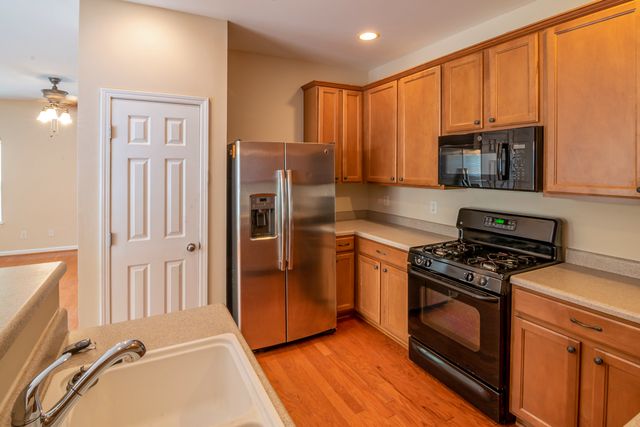
Signs your range hood needs a repair
Most range hood issues fall into one of a few clear patterns. Here's what to listen and look for.
Weak suction
By far the most common complaint, and usually just a clogged grease filter rather than a broken hood.
Fan hums but won't spin
A classic sign of a failed capacitor, a burned-out motor, or a shaft seized by grease buildup.
No power to fan or lights
Check the breaker first — if power is present but nothing works, an internal fuse or wiring issue is likely.
Loud rattling or squealing
Usually worn fan bearings, a loose blade, or debris caught in the fan housing.
Lights won't turn on
Often a burned-out bulb, but a bad socket or wiring issue is next if a new bulb doesn't fix it.
Unresponsive control panel
On electronic models, this can follow a power flicker or point to internal moisture or a failed board.
Common causes and what repairs typically cost
Here's what usually causes each range hood problem we see in The Colony, and the typical price range once your technician confirms the exact issue.
| Likely cause | What it means | Typical repair cost* |
|---|---|---|
| Clogged grease filter | Restricts airflow and causes the vast majority of weak-suction calls. | $30 – $80 |
| Faulty fan switch | Controls power to individual fan speeds — a common mechanical failure. | $75 – $150 |
| Failed run capacitor | Gives the motor its initial power boost to start spinning. | $80 – $150 |
| Burned-out fan motor | The unit hums but the blades don't turn, even with debris cleared. | $150 – $350 |
| Blown internal fuse or wiring issue | Cuts power to the fan, lights, or both at once. | $100 – $250 |
| Failed control board (electronic models) | Manages speed settings and touch controls on newer hoods. | $200 – $450 |
*Ranges reflect typical parts-and-labor costs across the industry. Your technician confirms the exact price on-site before starting any repair.
Most weak-suction calls are prevented by one habit
Over half of the weak-suction repair calls we get trace back to a grease filter that simply needs cleaning or replacing. It's the cheapest fix on this page, and keeping up with it protects the motor from having to work harder than it should.
- Clean metal grease filters every 1 to 3 months
- Replace charcoal filters on ductless hoods every 6 to 12 months
- If suction is still weak after cleaning, ductwork is the next likely spot
- After a power flicker, try cycling the breaker before calling us
How we repair your range hood
Here's what happens from your first call to a working range hood again.
Inspect & diagnose
We check the filter, switch, motor, and wiring to find the actual cause.
Quote before we start
You get a flat-rate price for the repair before any parts are touched.
Repair on the spot
Most parts are stocked on the truck, so the fix usually happens the same visit.
Test airflow & lighting
We confirm full suction across all fan speeds and check the lights before we call it done.
Brands we repair
We regularly service Whirlpool, GE, Samsung, LG, and Bosch range hoods found throughout The Colony, including under-cabinet, wall-mount, and island models.
Related services
If your cooktop or oven needs attention too, we can often handle it all in one visit.
View all servicesRange hood repair questions
What homeowners in The Colony most often ask before booking a range hood repair.
Why does my range hood have weak suction?+
Over half of weak-suction calls come down to a clogged grease filter. If cleaning or replacing the filter doesn't help, clogged ductwork or a weakening fan motor is the next likely cause.
How much does range hood repair cost?+
Most repairs run between $30 and $450 depending on the part, plus the standard $60–$95 service call fee. Filter cleaning is the cheapest fix; a control board replacement is on the higher end.
Why does my fan hum but not spin?+
This points to a failed capacitor, a burned-out motor, or a fan shaft seized by grease buildup. With the power off, the fan blade should spin freely by hand — if it doesn't, grease buildup is likely the cause.
Why did my range hood stop working after a power outage or flicker?+
Electronic-control hoods can enter a fault state after a power interruption. Try cycling the breaker off for 30 seconds and back on. If a mechanical switch model runs slowly or hums afterward, the capacitor may have been damaged by the surge.
Is it worth repairing an older range hood?+
Quality range hoods often last 15 to 25 years, so most motor and switch repairs are worth it. It's usually only worth considering replacement if you're remodeling, want stronger ventilation, or the hood shows repeated mechanical failures.
How often should I clean the filters to avoid repairs?+
Clean metal grease filters every 1 to 3 months depending on how often you cook, and replace charcoal filters on ductless hoods every 6 to 12 months. This single habit prevents the majority of suction-related service calls.
Weak suction or a fan that won't spin? Let's fix that today.
Call now for a same-day or next-day appointment with a local technician.